

Aras Bozkurt, Anadolu University, Türkiye
Aras Bozkurt is a researcher and faculty member at Anadolu University, Türkiye. With MA and PhD degrees in distance education, Dr. Bozkurt's work focuses on empirical studies in areas such as distance education, online learning, networked learning, and educational technology. He applies critical theories like connectivism, rhizomatic learning, and heutagogy to his research. Dr. Bozkurt is also interested in emerging research paradigms, including social network analysis, sentiment analysis, and data mining. Dr. Bozkurt's studies also cover the integration of artificial intelligence technologies into educational processes in the axis of human-machine interaction.
His dedication to advancing the field is reflected in his editorial roles as the Editor-in-Chief of Open Praxis and Asian Journal of Distance Education, as well as his roles as an associate editor for prestigious journals like Higher Education Research and Development, Online Learning, eLearn Magazine, and Computer Applications in Engineering Education.
Speech Title: The Symbiotic Future: Mastering Hybrid Intelligence Through Human-AI Collaboration
Abstract:This keynote investigates the emergence of Hybrid Intelligence—the synergy resulting from the seamless integration of human cognitive strengths with Artificial Intelligence (AI) capabilities. We move beyond theoretical discussions to establish practical frameworks for effective Human-AI Collaboration across various domains. The core focus is on the interaction layer, emphasizing the critical role of intuitive design, transparent communication protocols, and a clear division of labor in transforming AI from a computational tool into an active, collaborative partner. We analyze how organizations can intentionally engineer a symbiotic future to enhance human decision-making, accelerate complex problem-solving, and generate novel value that surpasses the capacity of either entity working in isolation.

Pavel Loskot, IEEE Senior Member,Zhejiang University, China
Pavel Loskot (Senior Member, IEEE) received the B.Sc. and M.Sc. degrees in biomedical electronics and radioelectronics from the Czech Technical Universiyt of Prague, Czech Republic, and the Ph.D. degree in wireless communications from the University of Alberta, Canada.,Before joining ZJU-UIUC Institute as an Associate Professor in 2021. He was a Senior Lecturer with Swansea University, U.K. From 2014 to 2015, he was a Visiting Researcher with Computational Science Research Center, Beijing, China. From 1999 to 2001, he was a Research Scientist with the Centre for Wireless Communications, Oulu, Finland. His research interests focuse on mathematical modeling, statistical signal processing and machine learning for multi-sensor, and time-series data. He is an Elected IARIA Fellow 2025, a Fellow of the Higher Education Academy, U.K., and holds a Recognized Research Supervisor distinction by the U.K. Council for Graduate Education. He is a Technical Committee Member of many IEEE conferences annually. From 2014 to 2020, he served on the IEEE Membership Development Team and Selection Committee, the U.K., and Ireland Section.
Speech Title: On Responsible Use of AI in Academic Teaching and Learning
Abstract:Human thinking and decision making represent complex processes that are very difficult and even impossible to model accurately. Using AI to enhance these processes is nowadays a blind, trial-and-error strategy, which can easily become rather costly. Previous integration of digital technologies within our society revealed that the technologies rarely create new, but greatly amplify the existing problems. The safe and responsible use of AI in teaching and learning requires that we identify what problems are likely going to be amplified in order to avoid or at least mitigate undesired outcomes and costs. For example, the long-term use of AI has been found to negatively affect cognitive capabilities and learning motivations for students, but AI can be beneficial in well-defined small tasks. In this talk, I will outline human thinking processes that were identified as being the most effective in solving scientific problems, which may indicate how we think, learn and understand, and which can guide us how to safely integrate AI for improving academic teaching and learning.
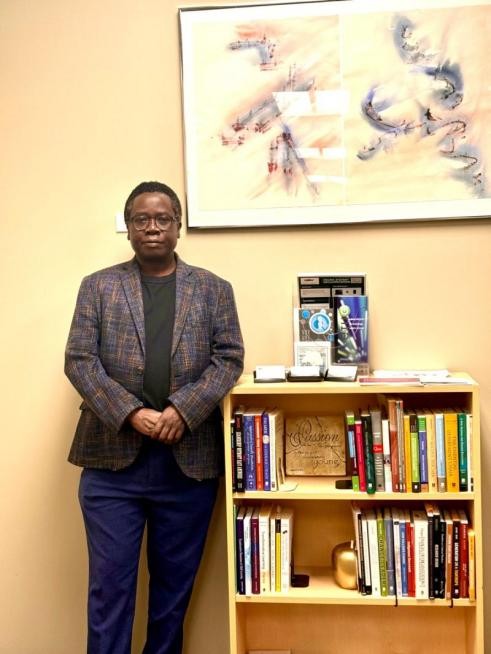
Ben Kei Daniel,ACM Member, IEEE Senior Member, University of Northern British Columbia, Canada
Ben Kei Daniel, PhD, SMIEEE, is Professor of Computer Science and Director of the Centre for Teaching, Learning and Technology (CTLT) at the University of Northern British Columbia, Canada. His research focuses on the development and application of advanced learning technologies, research methodologies, and the role of artificial intelligence in supporting sustainability and sustainable initiatives in higher education. Professor Daniel is an internationally recognised and award-winning research methodologist. He currently serves as Chief Editor of the Research Methods section in Frontiers in Research Metrics and Analytics and as Editor of the Electronic Journal of Business Research Methods. He has authored over 200 peer-reviewed publications, including six books. He has supervised more than 56 graduate students, predominantly at the doctoral level, to completion, and has provided extensive mentorship to early- and mid-career academics globally. He has also served as a visiting Professor at universities in East Africa, Malaysia, and Australia, and has delivered several keynote presentations at international conferences.
Speech Title: Beyond AI Readiness: Towards Sustainable and Responsible AI in Higher Education
Abstract: Artificial intelligence (AI) is rapidly reshaping higher education, influencing teaching, learning, research, as well as institutional operations and strategy. Universities increasingly position themselves as “AI ready” through policies, strategies and integration efforts. However, a critical question remains: how prepared are universities to meaningfully and responsibly integrate AI across these domains, particularly in ways that advance sustainability? Drawing on three years of research, I examine the disconnect between institutional ambition and the realities of AI implementation. While innovation continues to advance, key institutional foundations for responsible AI adoption remain unevenly distributed and often under-resourced, particularly in relation to human capability, sustainability and ethical governance. I also highlight the importance of inclusion, emphasizing the need to integrate diverse knowledge systems and perspectives in shaping how AI is understood and applied to support sustainable outcomes. In this keynote, I will present a multidimensional framework of AI readiness, framed through the lens of AI for sustainability and sustainable AI. This framework emphasizes organizational coherence, sustained capacity building and responsible practice as essential conditions for ensuring that AI not only transforms higher education, but does so in ways that are socially responsible, environmentally sustainable and ethically grounded.
Copyright © 2026 International Conference on Smart Education and Data Mining